


In stock - 10 шт.
eSUN TPU-LW White Lightweight Foamable TPU Filament 0.75 kg eSUN TPU-LW White 0.75 kg is a white li...
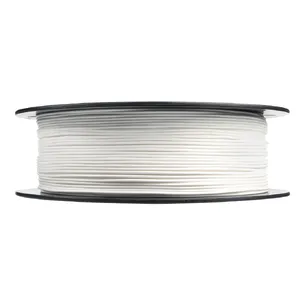
eSUN TPU-LW White Lightweight Foamable TPU Filament 0.75 kg eSUN TPU-LW White 0.75 kg is a white li...
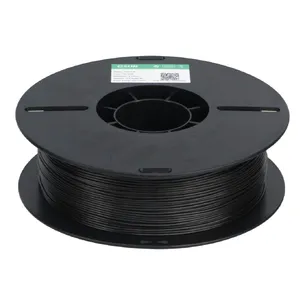
eSUN TPU-LW Black Lightweight Foamable TPU Filament 0.75 kg eSUN TPU-LW Black 0.75 kg is a black li...
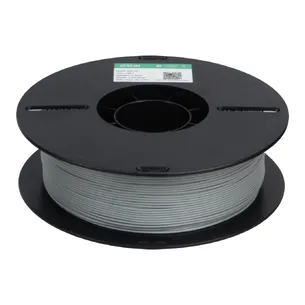
eSUN TPU-LW Grey Lightweight Foamable TPU Filament 0.75 kg eSUN TPU-LW Grey 0.75 kg is a grey light...
eSUN TPU-LW is a lightweight foamable TPU filament for FDM/FFF 3D printing, designed for flexible, soft and lightweight models. Unlike standard TPU, this material can foam during printing: with properly tuned temperature, speed and flow rate, it expands in volume, reduces the density of the finished part and produces lighter prints with a matte surface and less visible layer lines.
TPU-LW is especially useful when standard flexible TPU is too heavy and PLA-LW is not elastic enough. The material combines TPU flexibility, controlled foaming and a pleasant matte surface texture. It is suitable for aircraft models, ship models, cosplay props, sporting accessories, flexible wearable parts, dampers, shock-absorbing inserts, protective pads and technical prototypes where low weight, softness, resilience and elastic deformation are important.
TPU-LW is not standard TPU-95A and not PLA-LW. It is a separate eSUN TPU-based filament line with a foaming effect. During printing, the material can change its structure: at higher temperatures, it foams more actively, expands in volume and helps reduce the actual material flow required for the model wall. As a result, the finished part becomes lighter, softer and has a more pronounced matte texture.
The foaming degree depends on several parameters: nozzle temperature, print speed, flow rate, wall thickness, hotend stability and the selected print profile. TPU-LW therefore requires more careful tuning than standard TPU, but with a correct profile it delivers a unique combination of flexibility, low weight and a pleasant surface finish.
The TPU-LW line is available in basic technical colors suitable for prototypes, models and functional parts:
| Color | Description | Best applications |
|---|---|---|
| White | Clean light color, convenient for painting and decorative post-processing. | Cosplay, mockups, aircraft models, display parts, models for painting. |
| Black | Clean matte technical color for functional and visually neutral parts. | Dampers, sporting accessories, protective elements, technical parts without painting. |
| Grey | Universal engineering color for prototypes and functional models. | Engineering mockups, functional parts, prototypes, cosplay bases, neutral models. |
| Property | Value |
|---|---|
| Brand | eSUN |
| Product line | TPU-LW / eTPU-LW |
| Material type | Lightweight foamable TPU filament |
| Diameter | 1.75 mm |
| Spool weight | 0.75 kg |
| Colors | White, Black, Grey |
| Print technology | FDM / FFF |
| Maximum foaming ratio | Up to 172% |
| Approximate finished part hardness | About 93A–77A depending on foaming settings |
| Main applications | Aircraft models, ship models, cosplay, wearable parts, sporting accessories, dampers, lightweight flexible parts |
| Property | Value |
|---|---|
| Density according to TDS | 1.12 g/cm³ |
| Melt flow index | 5 at 190 ℃ / 10 kg |
| Tensile strength | 24.5 MPa |
| Flexural strength | 5.4 MPa |
| Flexural modulus | 113 MPa |
| IZOD impact strength | 48 kJ/m² |
| Elongation at break | N/A |
| Heat deflection temperature | N/A |
| Parameter | Recommended value |
|---|---|
| Drying before printing | 55 ℃ for more than 4 hours |
| Nozzle temperature | 210–270 ℃ |
| Bed temperature | 40–60 ℃ |
| Print speed | 20–40 mm/s as the recommended starting range |
| Speed after tuning | Up to 100 mm/s with a stable print profile |
| Fan speed | 100% |
| Retraction | Disable or minimize |
| Recommended extruder | Direct Drive / short filament path |
| Recommended hotend | All-metal hotend for long printing above 250 ℃ |
The main feature of TPU-LW is the ability to adjust part density, weight and softness through print settings. The higher the temperature at the same speed, the stronger the foaming. The higher the speed at the same temperature, the less time the material spends in the hot zone, so foaming becomes weaker.
| Setting | What happens | Practical result |
|---|---|---|
| Higher temperature | The material foams more actively | Lighter and softer part, more matte surface, lower flow required |
| Lower temperature | Foaming decreases | Denser and heavier part, less foamed surface |
| Higher speed | The material spends less time in the hotend | Lower foaming, higher flow may be needed |
| Lower speed | The material is heated for longer | Higher foaming, softer surface, flow often needs to be reduced |
| Lower flow / extrusion rate | Compensates for material expansion | Wall thickness becomes closer to target and the model becomes lighter |
| Material | Main feature | When to choose |
|---|---|---|
| TPU-LW | Flexible foamable TPU with reduced weight | When a flexible, soft and lightweight part is required |
| TPU-95A | Standard flexible TPU with high resilience and wear resistance | When a stable elastic material without foaming is needed |
| PLA-LW | Lightweight foamable PLA for rigid lightweight models | When a lightweight but more rigid part is needed, for example for aircraft models |
eSUN TPU-LW is compatible with FDM/FFF 3D printers using 1.75 mm filament and supporting nozzle temperatures up to 270 ℃. It can be printed on Bambu Lab, Creality, Prusa, Anycubic, Elegoo, Sovol, QIDI, Flashforge and other popular 3D printers when the print profile is properly tuned.
For TPU-LW, Direct Drive is preferred. Bowden printing is possible, but it requires lower speed, careful feeding, minimal filament path resistance and precise flow tuning. Stable temperature, stable speed and avoiding sudden profile changes are especially important for consistent foaming.
TPU-LW should be printed in a well-ventilated area. The material can burn when exposed to ignition sources, so it should be stored away from open flames, sparks, hot surfaces and strong oxidizing agents. During mechanical processing of printed parts, safety glasses and a mask are recommended if dust is generated.
The spool should be stored in a dry place, preferably in a sealed bag or container with desiccant. For long print jobs, a filament dry box or eBOX is recommended to keep the material dry during printing.
No. TPU-LW is a lightweight foamable TPU. During printing, it can expand in volume, reduce density and lower the weight of the finished part. TPU-95A is a standard flexible TPU with high resilience and wear resistance. TPU-LW is a foamable TPU that makes it possible to print lighter and softer parts by changing material structure during printing. PLA-LW is a lightweight foamable PLA that is better for rigid lightweight models. TPU-LW is a flexible foamable TPU, so it is better for soft, resilient and elastic parts. TPU-LW is supplied as a separate lightweight line with a 0.75 kg net spool weight. Product cards and category pages should use 0.75 kg. Yes. Drying at 55 ℃ for more than 4 hours is recommended before printing. Dry material provides more stable feeding, surface quality and foaming behavior. Stringing may appear because the material continues foaming inside the hot nozzle. This is normal for TPU-LW. To reduce its impact, use vase mode, avoid printing multiple models at once and keep print speed stable. Yes, but Direct Drive is preferred. On Bowden printers, reduce speed, minimize feeding resistance and tune temperature, flow and retraction carefully. The main eSUN TPU-LW colors are White, Black and Grey. Is TPU-LW the same as standard TPU?
How is TPU-LW different from TPU-95A?
How is TPU-LW different from PLA-LW?
Why is the TPU-LW spool 0.75 kg?
Does TPU-LW need drying?
Why does TPU-LW create stringing?
Can TPU-LW be printed on a Bowden printer?
What colors are available for eSUN TPU-LW?
eSUN TPU-LW is a specialized material for applications where a standard flexible filament is not enough and a lightweight, soft and elastic part with controlled density is required. It opens more possibilities for aircraft models, ship models, cosplay, sporting accessories, wearable products and technical prototypes. Thanks to foaming, TPU-LW allows model weight, softness and surface appearance to be controlled directly through print settings.