


In stock - 10 шт.
eSUN eLastic TPE-83A White Soft Flexible TPE Filament 1 kg eSUN TPE-83A White is a white soft flexi...
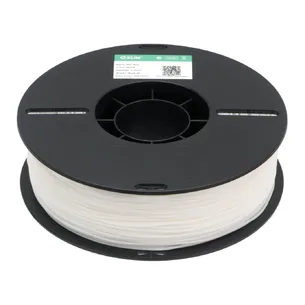
eSUN eLastic TPE-83A White Soft Flexible TPE Filament 1 kg eSUN TPE-83A White is a white soft flexi...
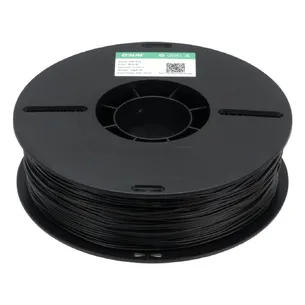
eSUN eLastic TPE-83A Black Soft Flexible TPE Filament 1 kg eSUN TPE-83A Black is a black soft flexi...
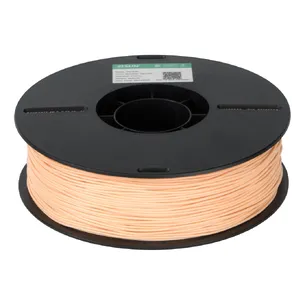
eSUN eLastic TPE-83A Buttery Salmon Soft Flexible TPE Filament 1 kg eSUN TPE-83A Buttery Salmon is ...
eSUN TPE-83A eLastic is a soft flexible TPE filament for FDM/FFF 3D printing with Shore 83A hardness. It is designed for elastic, soft, cushioning and pleasant-touch parts that require stronger flexibility than TPU-87A and TPU-95A. TPE-83A is suitable for cases, straps, wristbands, insoles, soft pads, dampers, cushioning inserts, sporting accessories and technical parts with rubber-like behavior.
The eSUN eLastic line is intended for applications where standard rigid plastics such as PLA, PETG and ABS are not flexible enough. Unlike hard materials, TPE-83A can bend, compress, stretch and return to shape. Thanks to Shore 83A softness, it provides a more rubber-like feel than standard TPU filaments and is a better choice for parts that contact hands, shoes, device housings or surfaces where soft cushioning is required.
TPE-83A is a thermoplastic elastomer with soft and flexible behavior. The “83A” value indicates Shore A hardness. The lower the Shore A value, the softer the material. Therefore, TPE-83A is softer than eFlex TPU-87A and much softer than TPU-95A. This makes it a good option for soft flexible parts, but it also requires more careful print tuning.
eSUN eLastic provides a matte surface effect, soft hand feel, high elasticity, good impact resistance and strength for functional flexible products. It is suitable when the part should not behave like a rigid plastic form, but as a soft resilient element: a damper, gasket, pad, shock absorber, strap or protective insert.
The official eSUN TPE-83A line includes basic and soft visual shades. Category pages may list all official colors, while product cards should use the exact color of the selected item.
| Color | Description | Best applications |
|---|---|---|
| White | Light neutral color for paintable models, mockups and soft decorative elements. | Insoles, soft pads, wearable products, prototypes, paintable parts. |
| Black | Practical technical color for functional parts without additional painting. | Cases, dampers, gaskets, straps, protective elements, sporting accessories. |
| Buttery Salmon | Warm salmon-beige shade for soft visual parts and wearable products. | Wristbands, straps, soft accessories, decorative elements, product prototypes. |
| Property | Value |
|---|---|
| Brand | eSUN |
| Line | eLastic |
| Material | TPE-83A |
| Material type | Soft flexible TPE filament |
| Hardness | Shore 83A |
| Diameter | 1.75 mm |
| Spool weight | 1 kg |
| Colors | White, Black, Buttery Salmon |
| Print technology | FDM / FFF |
| Surface | Matte, soft-touch |
| Recommended feeding system | Direct Drive / short filament path |
| Main applications | Cases, insoles, straps, wristbands, dampers, gaskets, soft pads, sporting accessories |
| Property | Value |
|---|---|
| Density according to TDS | 1.14 g/cm³ |
| Tensile strength | 32 MPa |
| Elongation at break | 420% |
| Melt flow index | N/A |
| Flexural strength | N/A |
| Flexural modulus | N/A |
| IZOD impact strength | N/A |
| Heat deflection temperature | N/A |
| Material behavior | Soft, flexible, elastic, impact-resistant, rubber-like |
| Parameter | Recommended value |
|---|---|
| Drying before printing | 55 ℃ for more than 4 hours |
| Nozzle temperature | 220–250 ℃ |
| Bed temperature | 45–60 ℃ |
| Printing speed | 20–50 mm/s |
| Recommended starting speed | 20–30 mm/s for first tests |
| Fan speed | 100% |
| Retraction | Minimal, tune by testing |
| Recommended extruder | Direct Drive / short filament path |
| Bowden / remote extruder | Not recommended |
| Build surface | PEI, textured PEI sheet, glass with adhesive or another TPE/TPU-compatible surface |
| Material | Hardness / behavior | When to choose |
|---|---|---|
| TPE-83A / eLastic | The softest material in the group, Shore 83A, rubber-like behavior | When maximum softness, touch comfort, flexibility and cushioning are required |
| TPU-87A / eFlex | Soft clear TPU Shore 87A | When a soft clear flexible part is needed, but slightly harder than TPE-83A |
| TPU-95A | Harder and more stable TPU Shore 95A | When easier printing and a less soft functional TPU part are needed |
| TPU-LW | Lightweight foamable TPU with adjustable density | When a lightweight flexible part with foaming behavior is needed |
eSUN TPE-83A is compatible with FDM/FFF 3D printers using 1.75 mm filament and supporting a 220–250 ℃ nozzle temperature range. It can be printed on Bambu Lab, Creality, Prusa, Anycubic, Elegoo, Sovol, QIDI, Flashforge and other popular 3D printers when soft flexible filament feeding is properly tuned.
For TPE-83A, Direct Drive extruders are preferred. Bowden systems or remote extruders are not recommended because soft Shore 83A material is difficult to push reliably through a long tube. Stable results require a short filament path, low speed, minimal retraction, correct extruder gear pressure and dry filament.
TPE-83A is not classified as a hazardous chemical under GHS, but standard safety measures should be followed during printing and post-processing. Print in a well-ventilated area, avoid overheating, open flames, sparks and hot surfaces. During mechanical processing of printed parts, safety glasses and a mask are recommended if dust is generated.
The spool should be stored in a cool, dry place, preferably in a sealed bag or container with desiccant. After opening, do not leave the material in a humid room for a long time. For long print jobs, using a filament dry box is recommended so the soft filament remains dry and feeds consistently into the extruder.
Yes. TPE-83A has Shore 83A hardness, so it is softer and more rubber-like than TPU-87A Shore 87A. TPU-95A is harder, easier to print and better suited for denser functional parts. TPE-83A is softer, more elastic and better for parts requiring soft touch and cushioning behavior. It is not recommended. TPE-83A prints better with Direct Drive or the shortest possible filament path because soft filament may compress and feed inconsistently in a long tube. Yes. Drying at 55 ℃ for more than 4 hours before printing is recommended. Dry material prints more consistently and produces fewer bubbles and strings. It is suitable for soft cases, straps, wristbands, insoles, dampers, gaskets, soft pads, sporting accessories, flexible drone elements and technical prototypes. TPE-83A is harder to print than PLA, PETG and stiffer TPU materials. For first experience with flexible filaments, a Direct Drive printer and low speed around 20–30 mm/s are recommended. The official colors are White, Black and Buttery Salmon. A specific store or batch may not have every color available. Is TPE-83A softer than TPU-87A?
How is TPE-83A different from TPU-95A?
Can TPE-83A be printed on a Bowden printer?
Does TPE-83A need drying?
What is eSUN TPE-83A best for?
Is TPE-83A suitable for beginners?
What colors are available for eSUN TPE-83A?
eSUN TPE-83A eLastic is a specialized filament for applications that require maximum softness, high flexibility and rubber-like behavior. It is suitable for parts that should feel pleasant to touch, absorb impact, bend and return to shape. If TPU-95A is too stiff and TPU-87A is still not soft enough, eSUN TPE-83A is the right choice for soft cases, insoles, wristbands, straps, dampers, sporting accessories and flexible technical parts.