


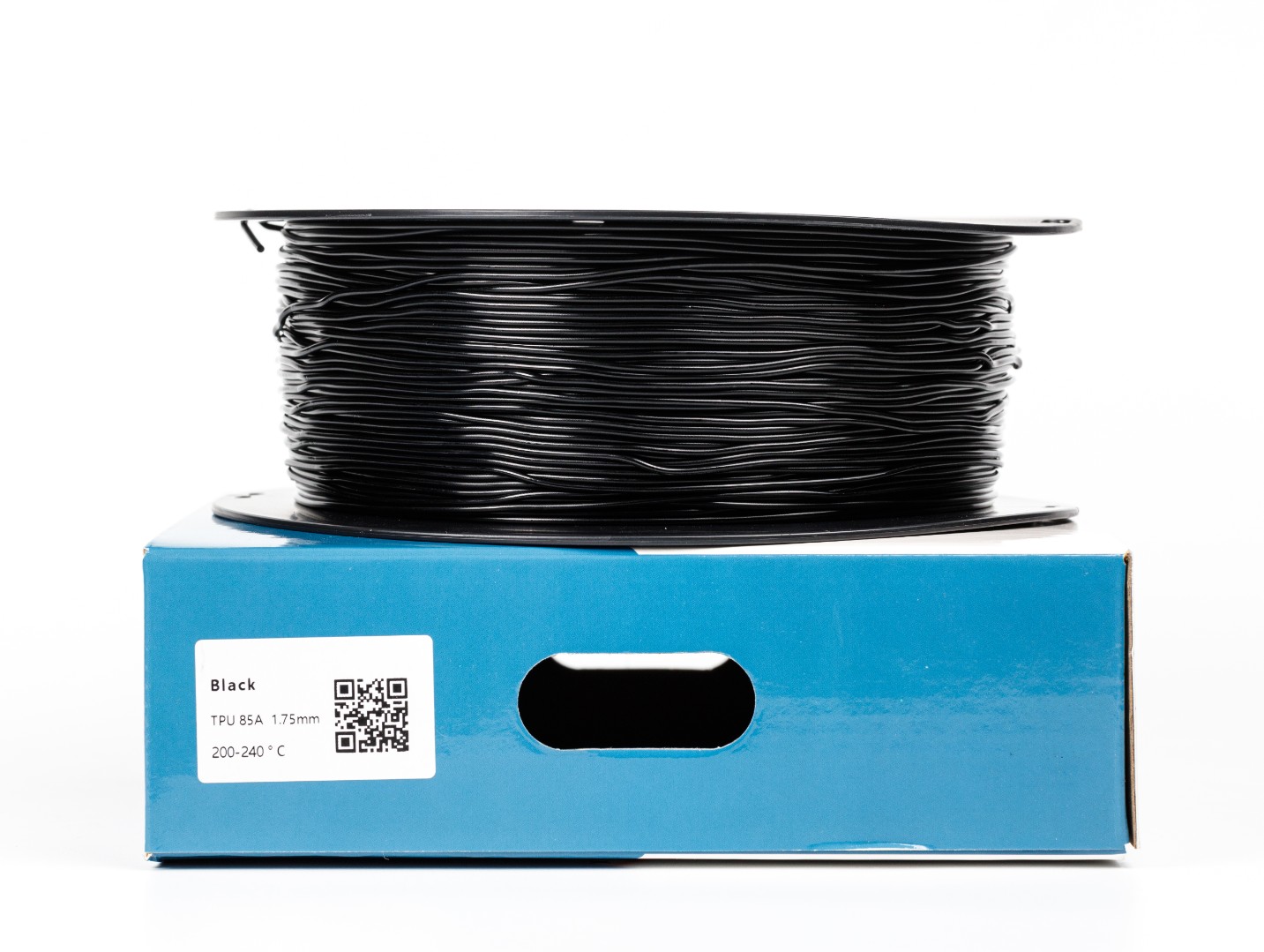
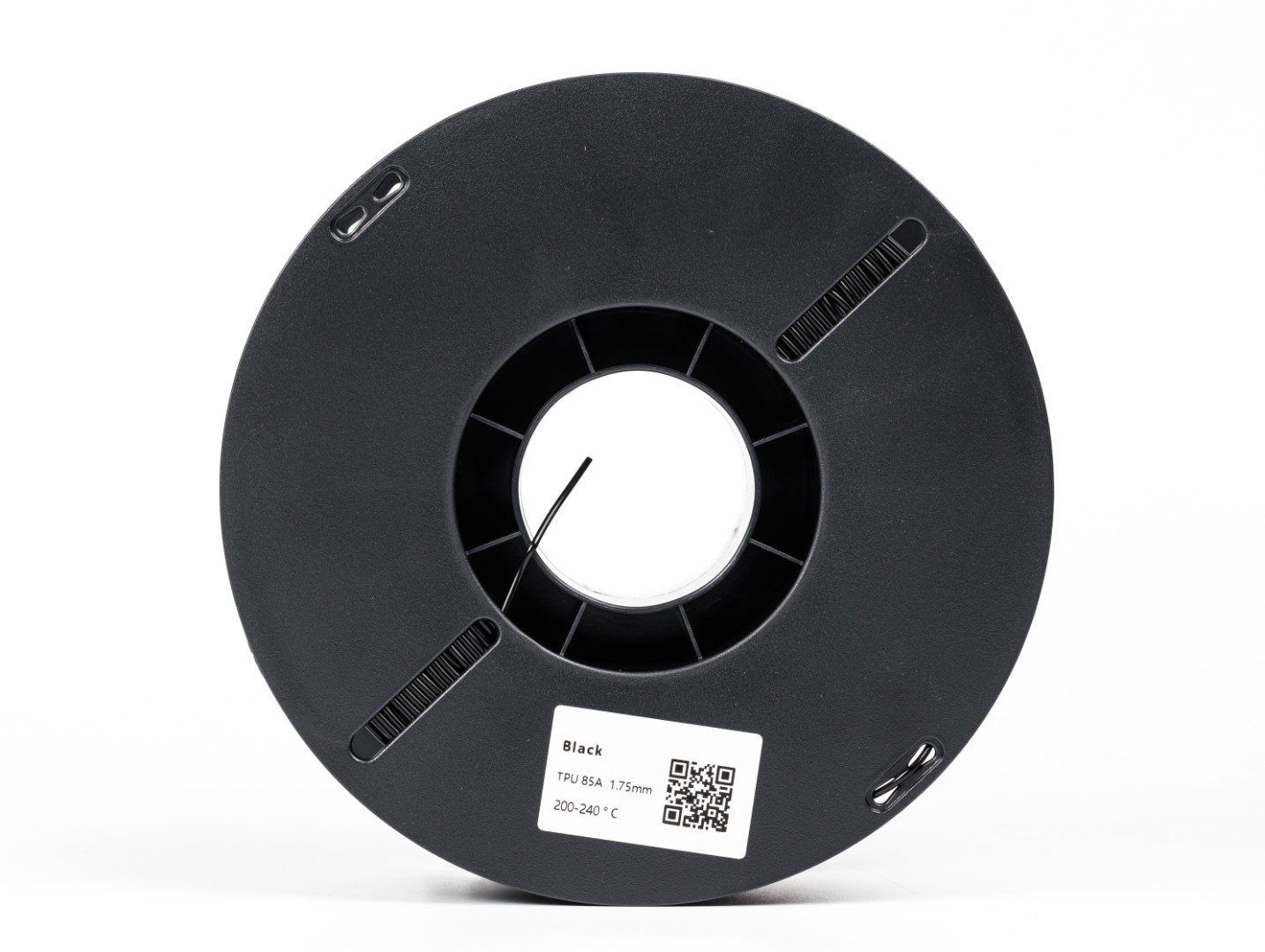
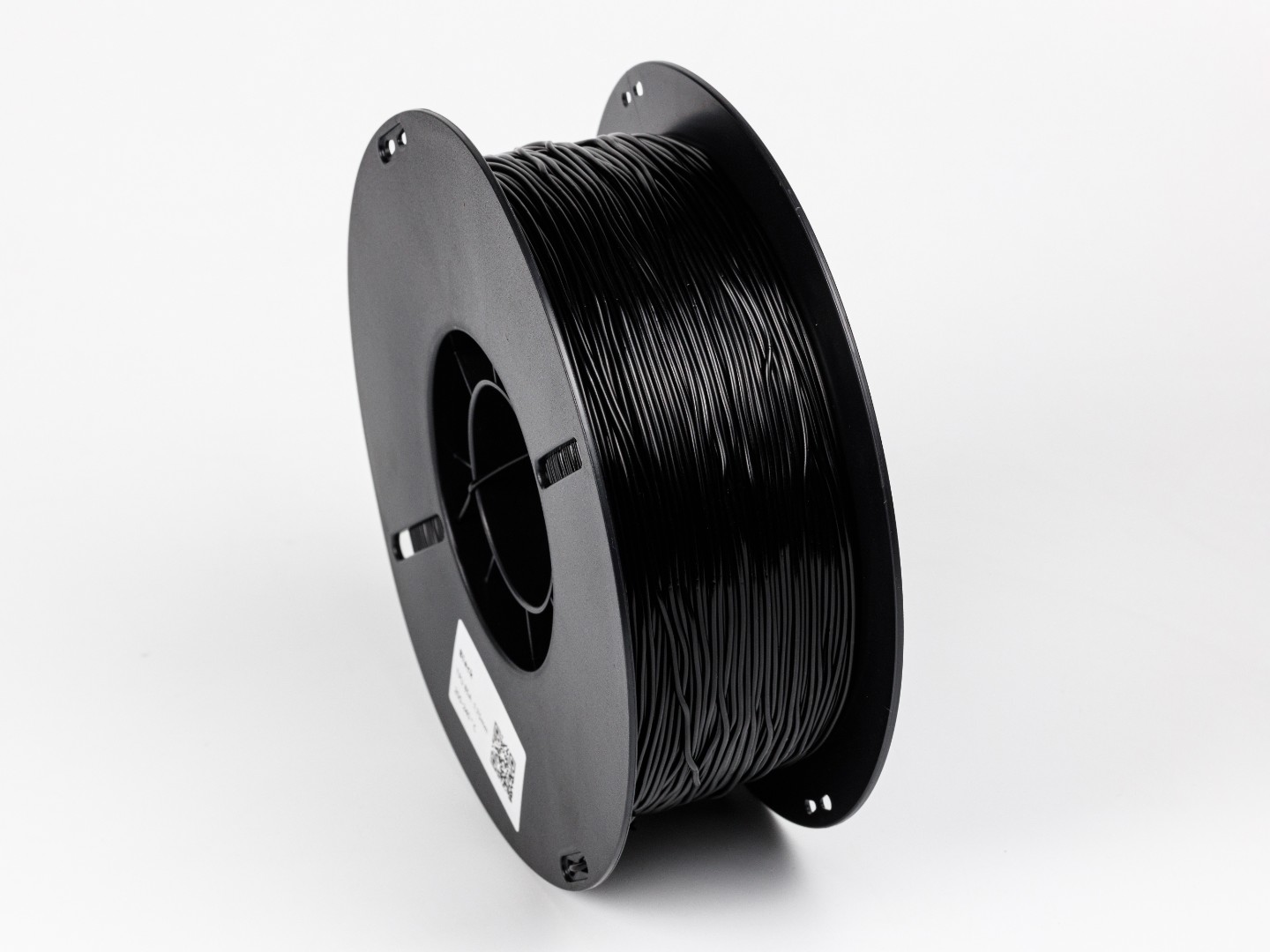
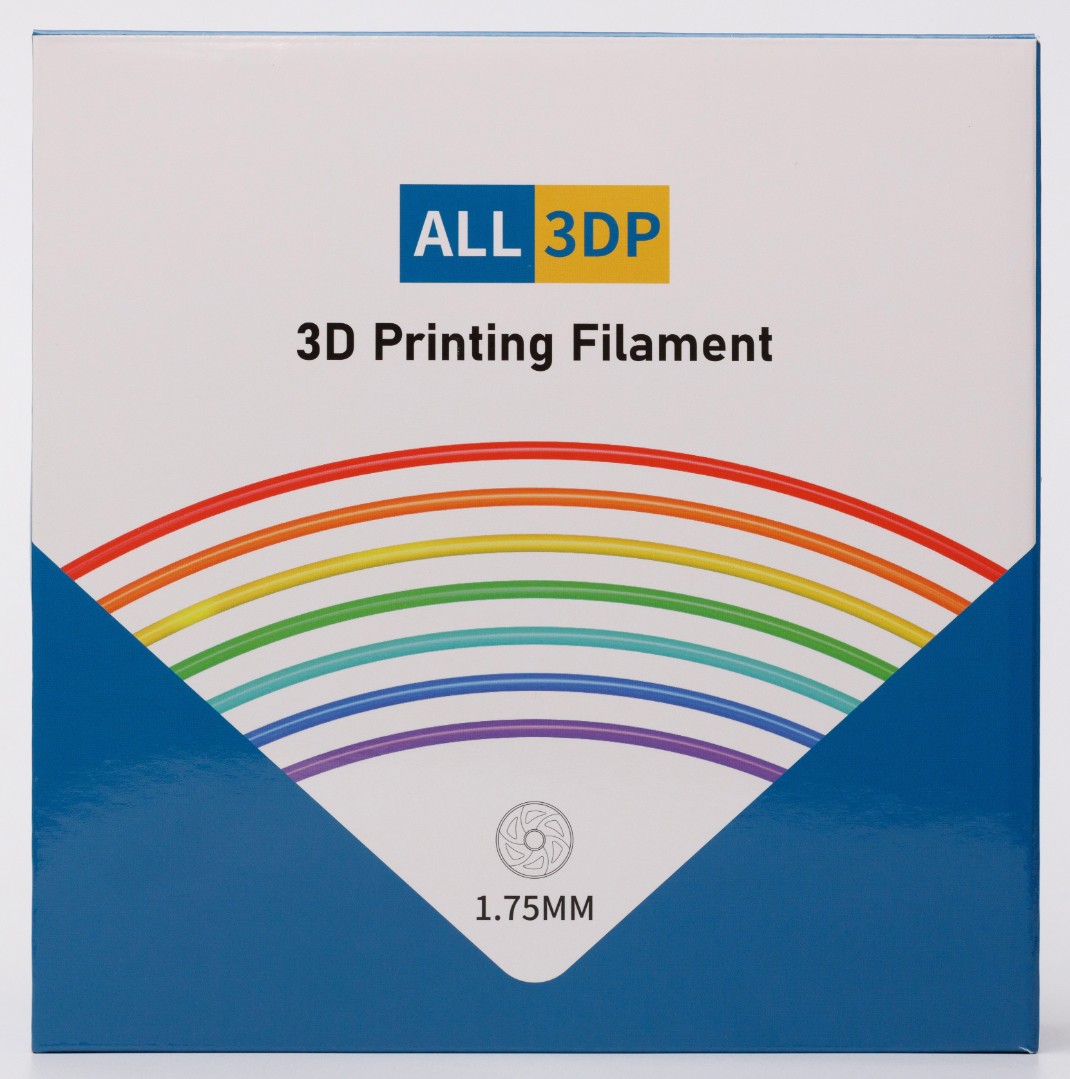


Black TPU 85A Filament for 3D Printer 1 kg | 1.75 mm
Black TPU 85A Filament for 3D Printer is a soft, flexible and elastic material for FDM/FFF 3D printing. Compared with TPU 95A, material with 85A Shore hardness is softer and more flexible, making it suitable for parts that require high elasticity, shock absorption and repeated bending.
⚫ Color: Black
Black TPU 85A has a universal technical appearance. This color is suitable for functional parts, flexible mounts, gaskets, dampers, protective pads, cases, soft inserts and prints where a practical dark shade is required.
- ⚫ Black color
- 🧩 Soft flexible TPU 85A material
- 📦 Net weight: 1 kg
- 🧵 Filament diameter: 1.75 mm
- ⚙️ Suitable for FDM/FFF 3D printers
✅ TPU 85A Advantages
- ↩️ Higher flexibility compared with TPU 95A
- 🛡️ Good shock absorption and deformation resistance
- 💪 Suitable for parts that need to bend and return to shape
- 🔧 Practical material for gaskets, dampers, pads and soft mounts
- ⚫ Black color for technical and functional models
📋 Technical Specifications
| Material | TPU |
|---|---|
| Hardness | Shore 85A |
| Color | Black |
| Net weight | 1 kg |
| Filament diameter | 1.75 mm |
| Material type | Soft flexible / elastic filament |
| Compatibility | FDM/FFF 3D printers using 1.75 mm filament |
⚙️ Recommended Printing Parameters
| Nozzle temperature | 220 - 240 ℃ |
|---|---|
| Bed temperature | 40 - 60 ℃ |
| Print speed | 15 - 30 mm/s |
| Cooling fan | 30 - 70% |
| Retraction | Minimal or disabled, tune according to extruder type |
| Feeding system | Direct drive is recommended |
| Build surface | PEI, glass, textured plate or adhesive-assisted surface |
🔧 3D Printer Compatibility
- ✅ Suitable for FDM/FFF 3D printers using 1.75 mm filament
- ⚙️ Direct drive extruder is strongly recommended for TPU 85A
- 🧵 Bowden printing may be difficult and requires very careful tuning
- 🔩 The filament path should be short, free and without sharp bends
🧰 Best Applications
- 🛡️ Dampers, shock absorbers and vibration-reducing elements
- 🔧 Flexible mounts, bushings, gaskets and seals
- 📱 Cases, protective pads and soft accessories
- 👟 Shoe parts, soft inserts, grips and soft-touch elements
- 🧪 Prototypes of soft elastic products
- ⚙️ Functional parts that require high flexibility
💡 Printing Tips
- 🐢 Print slowly: TPU 85A is softer than TPU 95A and needs more stable feeding.
- ⚙️ Use minimal retraction to reduce the risk of flexible filament jamming.
- 🧵 Avoid sharp bends in the filament path before the extruder.
- 📦 Store TPU in a dry place, preferably in a sealed bag with silica gel.
- 🧼 Clean the build plate before printing for stable first-layer adhesion.
❓ FAQ
TPU 85A is softer and more flexible than TPU 95A. It is better for highly elastic parts, but it is also more demanding to print because the filament is softer. Yes, but a direct drive extruder is recommended. TPU 85A can be more difficult for Bowden systems than TPU 95A. Yes, black TPU 85A is well suited for gaskets, dampers, flexible mounts, protective pads and functional parts requiring high elasticity. TPU 85A is soft and may feed inconsistently at high speed. Lower speed helps achieve smoother extrusion and reduces the risk of filament buckling.How is TPU 85A different from TPU 95A?
Can TPU 85A be printed on a standard FDM printer?
Is black TPU 85A suitable for technical parts?
Why should TPU 85A be printed slowly?