


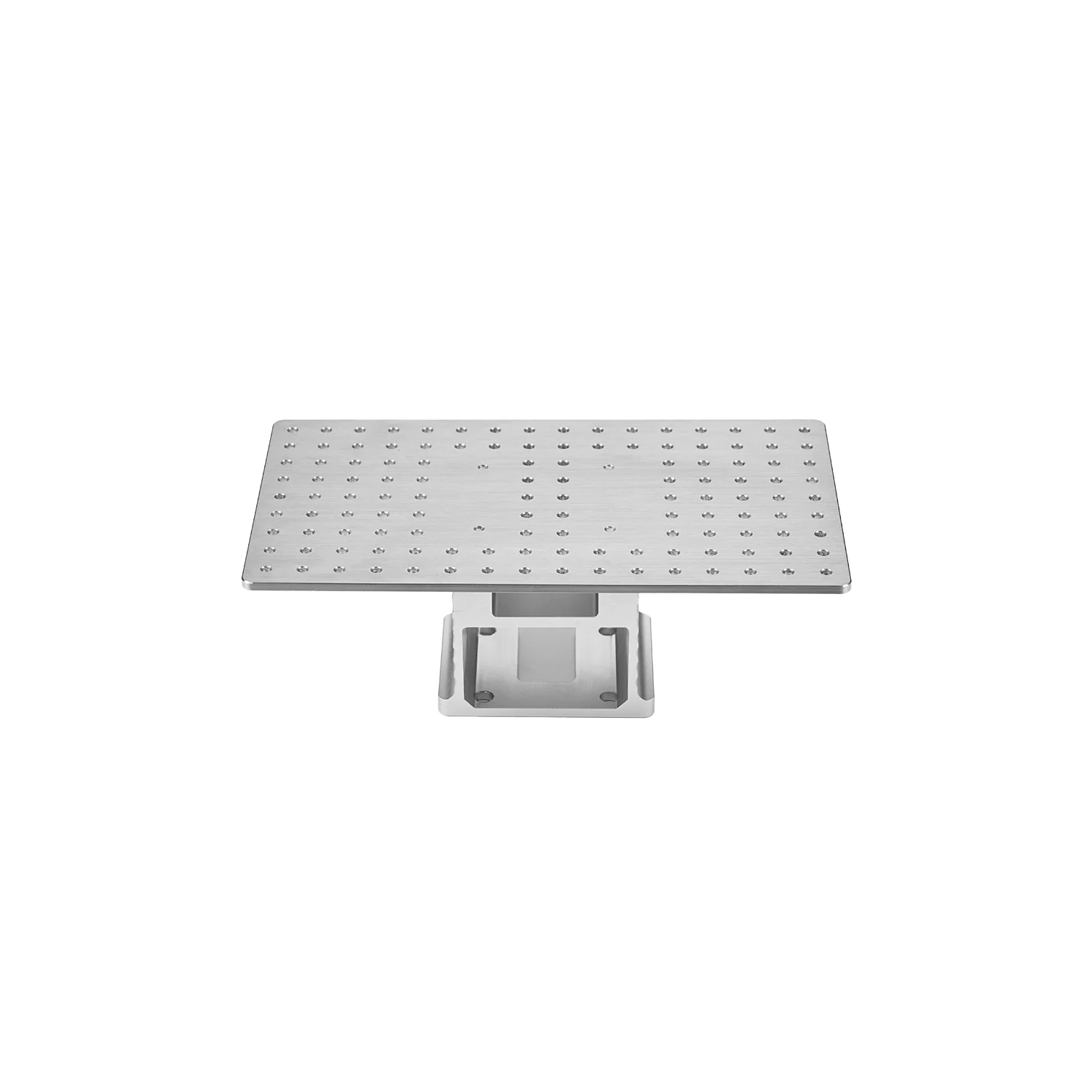
Perforated Steel Build Plate for Anycubic Photon P1
Anycubic Photon P1 Perforated Steel Plate is an original perforated steel build platform for the Anycubic Photon P1 resin 3D printer. It is designed to provide enhanced first-layer retention and is particularly suitable for high-viscosity photopolymer resins, large models and parts that place greater stress on the build plate contact area.
The perforated working surface helps improve model adhesion during printing. The plate can be used to replace a damaged component, as an additional platform for consecutive printing or as a specialized option for projects requiring stronger base retention.
Main Advantages
- official compatibility with the Anycubic Photon P1;
- strong steel construction;
- perforated working surface;
- enhanced first-layer retention;
- suitable for high-viscosity photopolymer resins;
- can improve the stability of large-model printing;
- suitable for long-duration print jobs;
- can be used as a spare build platform;
- convenient for consecutive and batch printing;
- silver protective and decorative finish.
Technical Specifications
| Specification | Value |
|---|---|
| Manufacturer | Anycubic |
| Product Name | Photon P1 Perforated Steel Plate |
| Product Type | Build plate for a resin 3D printer |
| Plate Type | Perforated steel build plate |
| Material | Steel |
| Color | Silver |
| Weight | 1570 g |
| Package Dimensions | 286 × 181 × 125 mm |
| Recommended Materials | Standard and high-viscosity photopolymer resins |
| Compatibility | Anycubic Photon P1 |
Perforated Build Plate Description
The build platform is one of the main components of a resin 3D printer. The first layers of the model are formed on its working surface, and the quality of their adhesion affects the success of the entire print job.
The perforated steel plate for the Anycubic Photon P1 features openings across the working surface. This design is intended to provide enhanced mechanical retention of the model base and helps reduce the risk of the print separating from the platform.
The perforated platform can be especially useful when working with high-viscosity resins, large models, substantial bases, wide support structures and parts with a large first-layer area.
The steel construction provides high rigidity and resistance to normal operating loads. The platform is suitable for regular use in workshops, service centers, laboratories and small production facilities.
Recommended Applications
- printing with high-viscosity photopolymer resins;
- production of large and heavy models;
- printing parts with a large base area;
- manufacturing functional prototypes;
- printing master models and technical parts;
- production of figures, miniatures and decorative objects;
- long-duration print jobs;
- consecutive and batch printing;
- replacement of a damaged platform;
- use as an additional specialized build plate.
Features of the Perforated Surface
The perforated surface is designed to provide more secure retention of the model base. With correctly selected bottom-layer exposure, the material forms a strong connection with the working surface, which is particularly important when higher separation loads are present.
A perforated build platform may require individual adjustment of bottom exposure, bottom-layer count, transition layers and release settings. The optimal values depend on the resin type, material temperature, base area and support structure.
For predictable results, complete a small test print before starting a large or long-duration model.
Perforated or Precision-Ground Build Plate
| Feature | Perforated Build Plate | Precision-Ground Build Plate |
|---|---|---|
| Working Surface | Steel surface with perforations | Solid precision-ground surface |
| Main Purpose | Enhanced model retention | Even adhesion and general-purpose printing |
| High-Viscosity Resin | Especially recommended | Suitable with correct settings |
| Large Models | Enhanced base retention | Stable contact with a flat surface |
| Model Base Surface | May depend on perforation position and base design | Formed against a solid ground surface |
| Recommended Choice | Projects requiring stronger retention | General everyday printing |
Benefits of an Additional Build Plate
An additional build platform helps reduce pauses between print jobs. After printing is completed, the platform with the finished models can be removed, a second platform can be installed and the next project can be started.
While the printer completes the new job, the previous models can be removed and the first plate can be cleaned and prepared for another cycle. This workflow is particularly useful for batch production and users who regularly complete multiple projects in succession.
Different platforms can also be assigned to different applications. The precision-ground plate can be used for general printing, while the perforated plate can be reserved for high-viscosity materials and models requiring enhanced retention.
When the Build Plate Should Be Replaced
- the working surface has received serious mechanical damage;
- the plate has been deformed after an impact or fall;
- the openings, mounting points or threaded connections are damaged;
- models adhere unevenly in different areas;
- cured resin fragments cannot be removed from the surface;
- the first layer separates after the print settings have been checked;
- an additional plate is required for high-viscosity resin;
- consecutive model production needs to be accelerated.
Compatibility
The build plate is designed specifically for the Anycubic Photon P1 resin 3D printer.
It is not a universal platform and should not be installed on the Anycubic Photon P1 Max, Photon Mono M7, Photon Mono M7 Pro, Photon Mono M7 Max or another Photon model without explicit confirmation of compatibility.
The Photon P1 and Photon P1 Max use build platforms with different dimensions, weights and structural parameters. Carefully check the selected version before ordering.
Installation Recommendations
- complete the current print job;
- raise the platform to a convenient position;
- turn off the printer and disconnect it from power;
- wear protective gloves;
- remove the installed platform;
- clean resin residue and contamination from the mount;
- install the perforated build plate;
- secure all mounting components correctly;
- verify the platform position;
- complete the leveling verification provided by the printer;
- perform a test print before starting a large model.
Printing Setup Recommendations
- begin with the recommended profile for the selected resin;
- check the bottom-layer exposure time;
- do not increase bottom exposure unnecessarily;
- consider the viscosity and temperature of the resin;
- use an appropriate base and support structure;
- avoid an excessively large solid-layer area;
- orient substantial models at a suitable angle;
- complete an adhesion test before batch production;
- recheck the first-layer settings after changing the build plate type.
Cleaning and Care
After printing, remove the models with an appropriate tool without applying excessive force. Uncured resin residue should be removed with a compatible cleaning agent according to the material manufacturer’s recommendations.
Pay particular attention to the openings in the perforated surface. Cured resin fragments should not remain inside them, as they can affect the model base and the quality of subsequent print jobs.
After cleaning, wipe the platform with a lint-free cloth and allow it to dry completely. Do not use damaged scrapers, impact tools, abrasive wheels or other equipment that could deform the working surface.
Safety Precautions
- wear nitrile protective gloves;
- do not touch liquid resin with unprotected skin;
- work in a well-ventilated area;
- do not remove a model while holding the platform above an open resin vat;
- prevent resin from reaching the exposure screen and printer components;
- do not use a deformed build platform;
- do not start printing if the platform is not securely attached;
- follow the instructions for the selected photopolymer resin.
Frequently Asked Questions
Which printer is this platform designed for?
The perforated steel build plate is designed for the Anycubic Photon P1 resin 3D printer.
Is it compatible with the Photon P1 Max?
No. A separate Perforated Steel Plate version with different specifications is available for the Photon P1 Max.
What is the purpose of the perforations?
The perforated surface is intended to provide enhanced retention of the model base. This can improve print stability when using high-viscosity resins, large models and parts that generate higher release loads.
Can standard resin be used?
Yes. The platform can be used with standard photopolymer resins, but the bottom-layer settings should be tested for each material and project.
Does the printer need to be recalibrated?
After installing a different build platform, verify its attachment and position and complete the leveling check provided by the Photon P1.
Do the exposure settings need to be changed?
Bottom-layer exposure and release settings may require adjustment. Begin with the recommended resin profile and complete a test print.
Can it be used as a spare build plate?
Yes. An additional build platform makes it possible to move to the next print job sooner and is convenient for batch production.
How should resin be removed from the openings?
Remove liquid resin with a compatible cleaning agent and a lint-free cloth. Do not use impact tools or damage the opening edges with sharp metal objects.
Why Buy the Photon P1 Perforated Steel Plate
The original perforated steel platform expands the capabilities of the Anycubic Photon P1 and provides enhanced model retention. It is particularly useful for high-viscosity resins, large parts and consecutive production workflows.
The platform can be used as a specialized working option or as a spare component to reduce downtime between print jobs.