


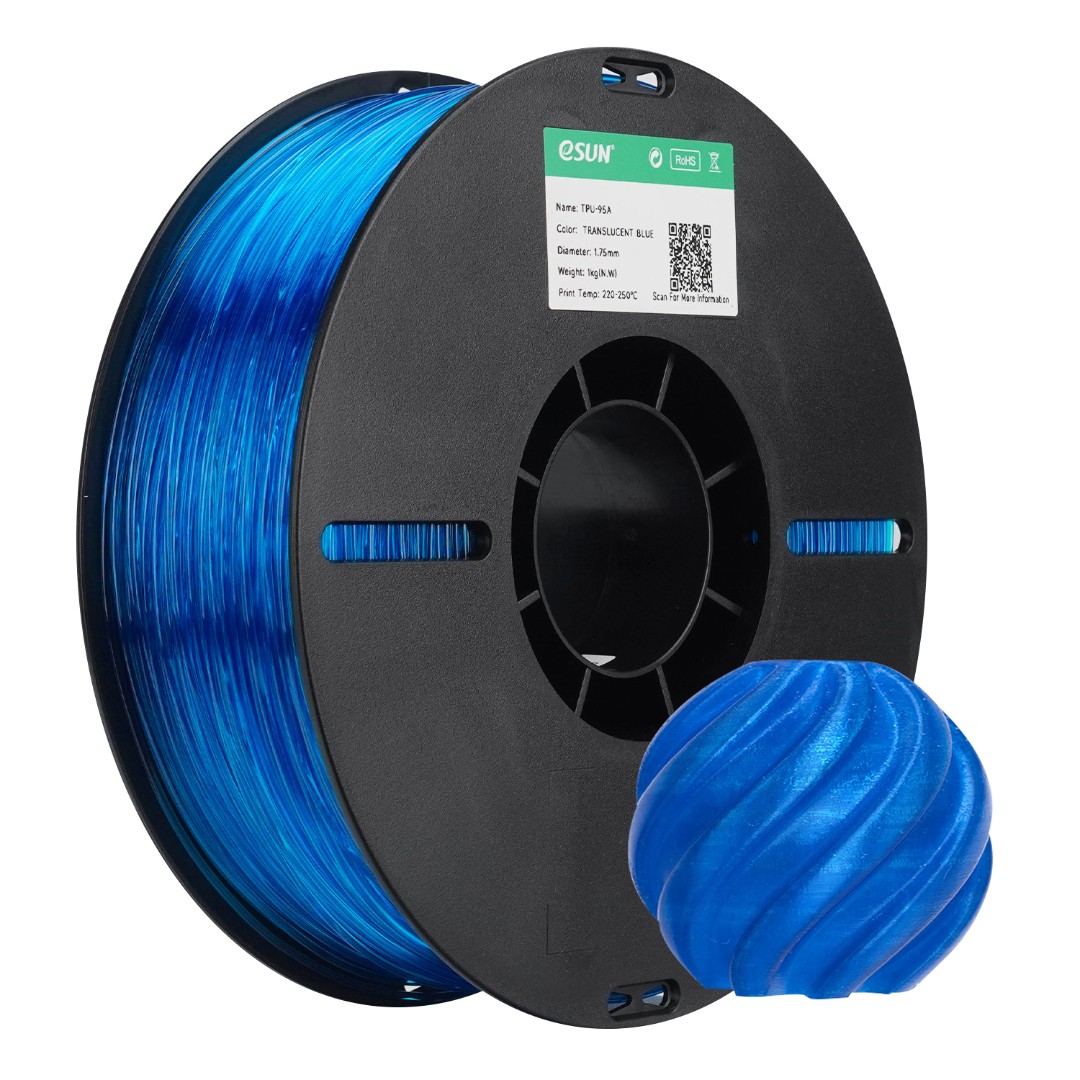
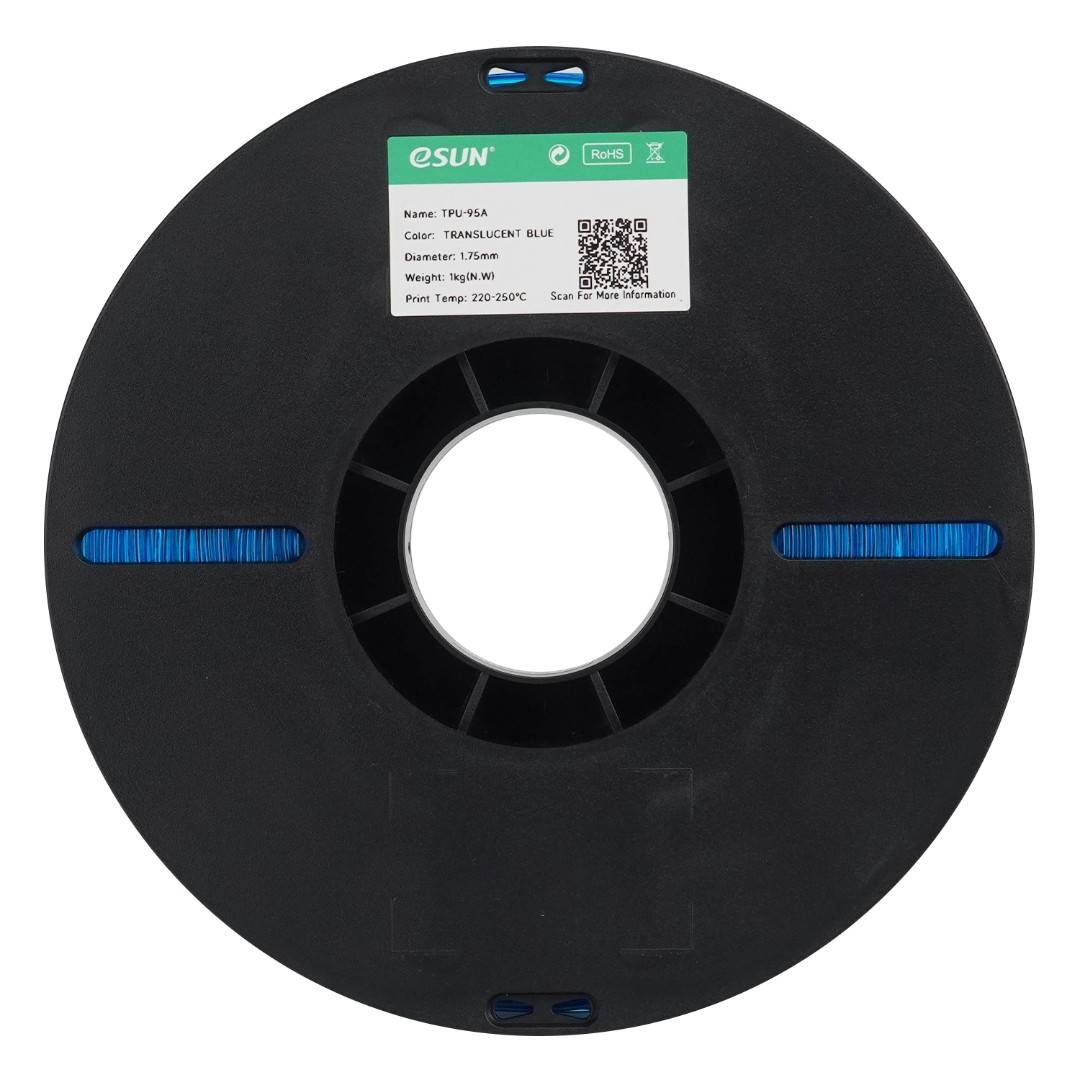
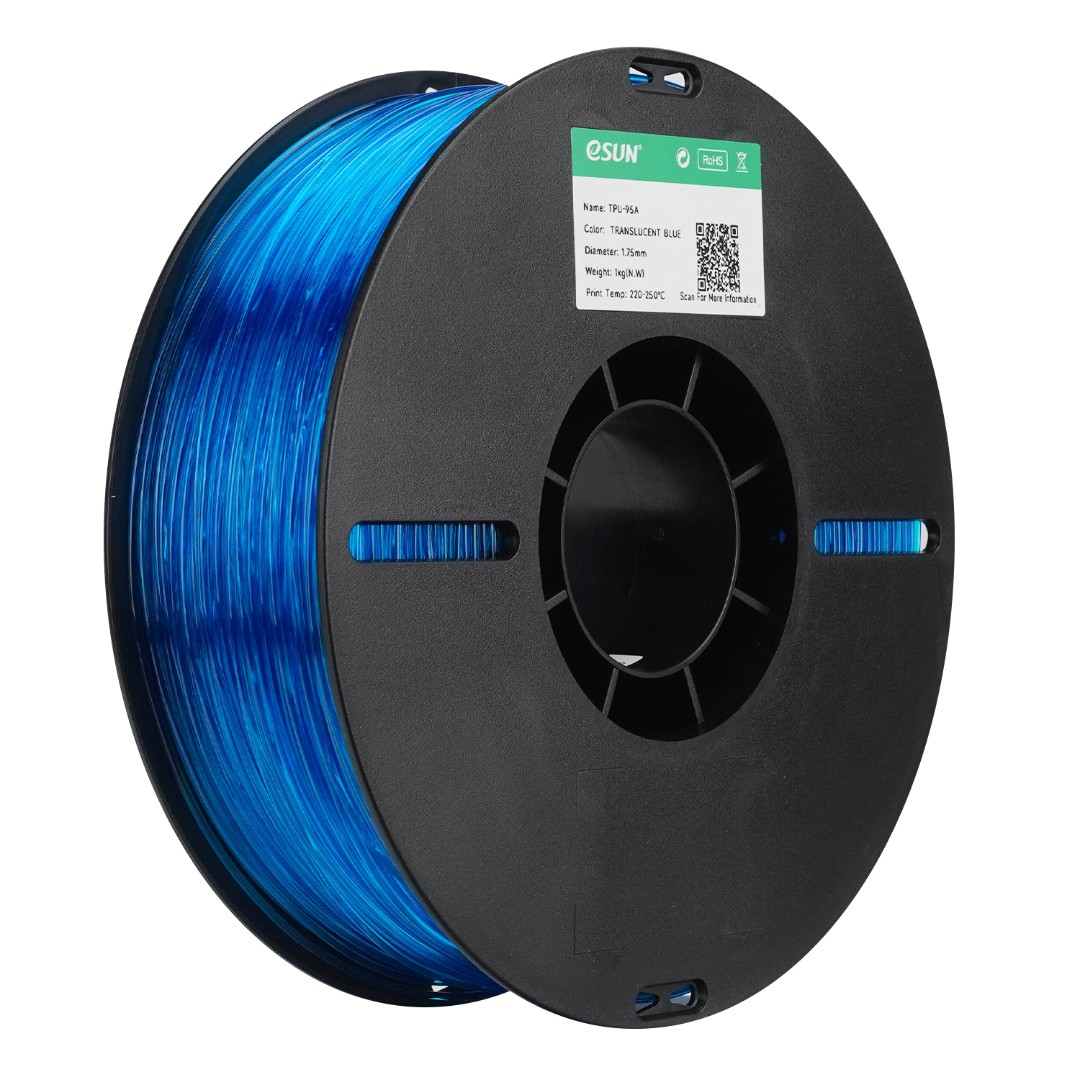
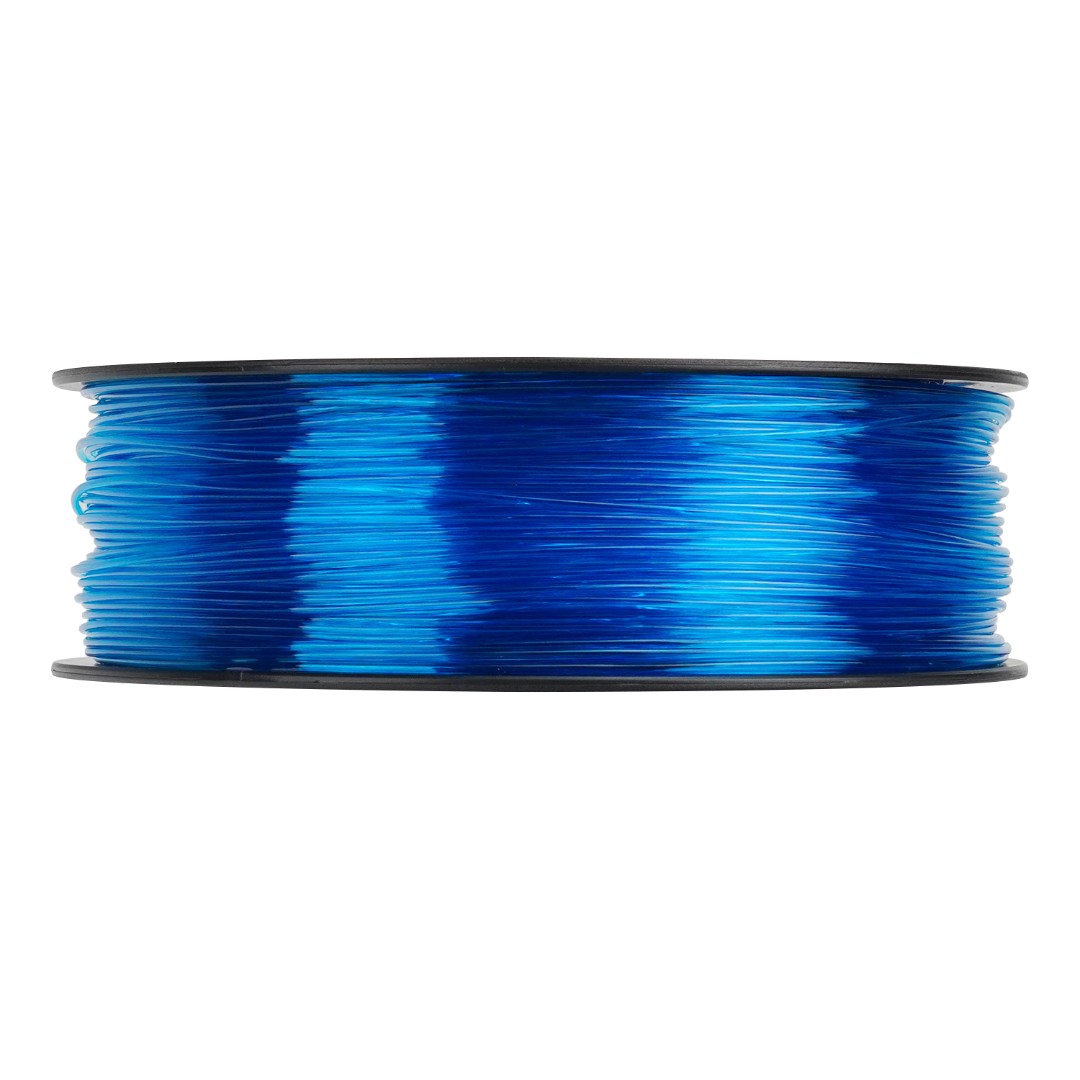
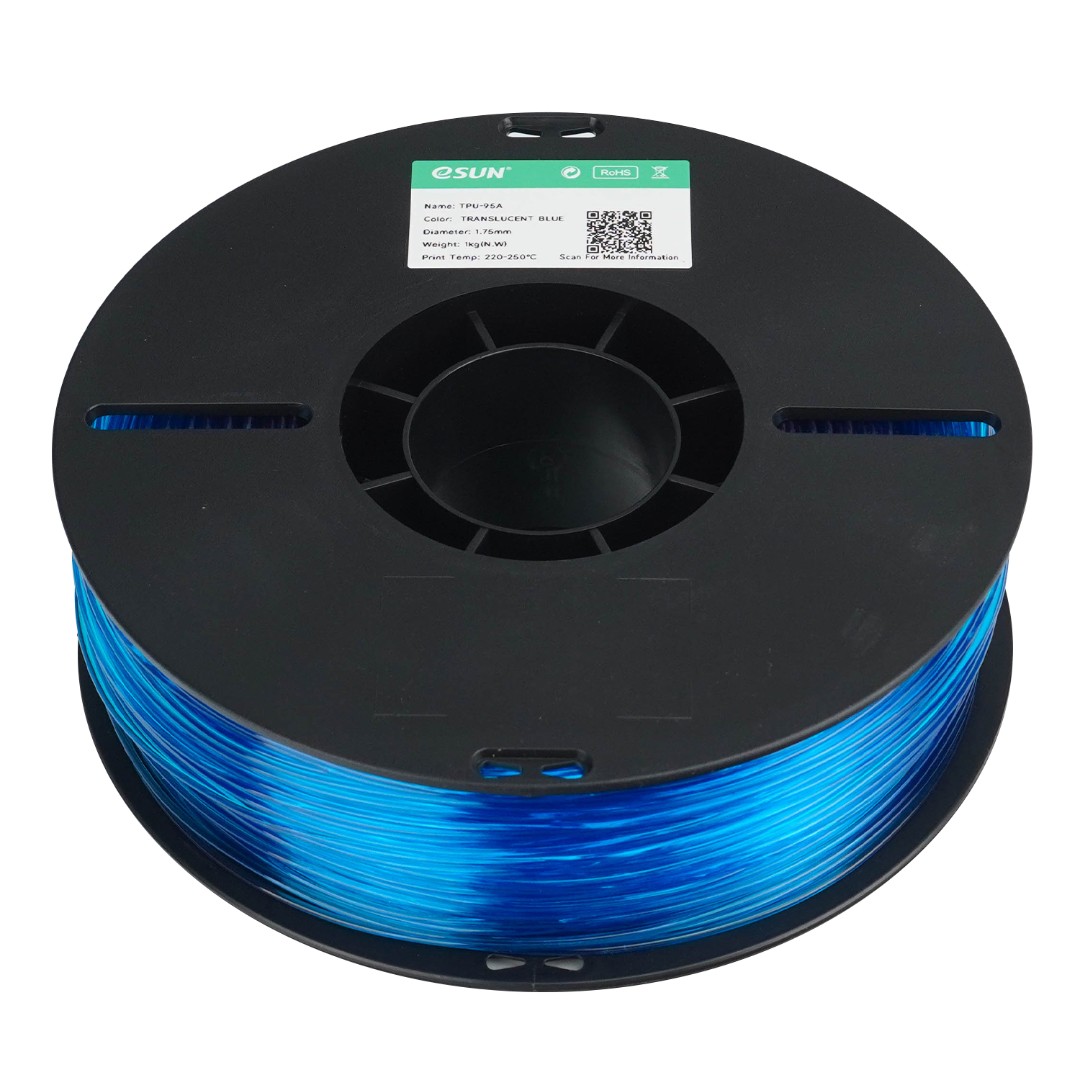
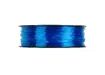
eSUN TPU-95A Blue Flexible TPU Filament 1 kg
eSUN TPU-95A Blue is a blue flexible TPU filament for FDM/FFF 3D printing with Shore 95A hardness. It combines elasticity, high resilience, tear resistance, wear resistance and good deformation resistance. TPU-95A is suitable for flexible technical parts, phone cases, watch bands, gaskets, shock-absorbing parts, protective pads, sporting accessories, insoles and elastomer prototypes.
Blue color is a practical choice for functional parts, sporting accessories, protective elements, color marking, technical prototypes, flexible mounts and parts that need to be visible while keeping a clean and professional appearance.
✅ Key advantages
- Shore 95A flexibility: elastic but still firm and controllable during printing.
- Blue color: suitable for technical parts, sporting accessories, marking elements and functional prototypes.
- High resilience: printed parts can bend and return to shape without quick deformation.
- Tear resistance: suitable for flexible parts exposed to stretching and bending.
- Wear resistance: a strong choice for pads, gaskets, straps and friction-exposed parts.
- Deformation resistance: printed parts keep their shape well in everyday use.
- Good printability: TPU-95A is easier to control than softer TPU grades.
- FDM/FFF compatibility: works with most 1.75 mm filament 3D printers.
📐 Technical specifications
| Property | Value |
|---|---|
| Brand | eSUN |
| Material | TPU-95A / eTPU-95A |
| Material type | Flexible thermoplastic polyurethane |
| Hardness | Shore 95A |
| Color | Blue |
| Diameter | 1.75 mm |
| Net weight | 1 kg |
| Print technology | FDM / FFF |
| Main use | Flexible parts, phone cases, watch bands, gaskets, shock absorbers, insoles, sporting accessories, marking elements, technical prototypes |
📊 Physical and mechanical properties
| Property | Value |
|---|---|
| Density | 1.21 g/cm³ |
| Melt flow index | 1.2 at 190 ℃ / 2.16 kg |
| Tensile strength | 35 MPa |
| Elongation at break | ≥800% |
| Flexibility | High |
| Resilience | High |
| Tear resistance | High |
| Wear resistance | High |
⚙️ Recommended Printing Parameters
| Parameter | Recommended value |
|---|---|
| Drying before printing | 55 ℃ for more than 4 hours |
| Nozzle temperature | 220–250 ℃ |
| Bed temperature | 45–60 ℃ |
| Printing speed | 20–50 mm/s |
| For Bowden extruder | 20 mm/s or lower |
| Fan speed | 100% as a starting point |
| Recommended extruder | Direct Drive / short filament path |
| Retraction | Minimal, tune by testing |
| Build surface | PEI, textured PEI sheet, glass with adhesive or another TPU-compatible surface |
🔧 TPU-95A printing recommendations
- Dry the filament at 55 ℃ for more than 4 hours before printing, especially if the spool has been opened.
- For best stability, use a Direct Drive extruder or a short filament path.
- On Bowden printers, print slowly: 20 mm/s or lower.
- Avoid sharp bends between the spool and extruder.
- Reduce retraction because TPU can stretch and compress inside the feeding path.
- Do not overtighten the extruder gear to avoid filament deformation.
- For flexible parts, use moderate speed, smooth acceleration and stable temperature.
- If stringing appears, check drying, temperature, retraction and travel speed.
- After long print jobs, cleaning filament can be used to clean the nozzle.
🧩 Best applications
- 🔵 Color indicators, marking inserts and visible functional parts.
- 🏃 Sporting accessories and equipment parts.
- 📱 Phone cases, protective pads and flexible housings.
- ⌚ Watch bands, bracelets and wearable accessories.
- 🔩 Flexible mounts, dampers, gaskets and seals.
- 👟 Insoles, soft inserts and shock-absorbing parts.
- 🚗 Automotive pads, damping elements and protective parts.
- 🧪 Elastic prototypes for fit and shape testing.
- 🔌 Flexible parts for electronics, devices and technical mockups.
✅ 3D printer compatibility
eSUN TPU-95A Blue is compatible with most FDM/FFF 3D printers using 1.75 mm filament and supporting a 220–250 ℃ nozzle temperature range. It can be printed on Creality Ender/K1, Bambu Lab A1/P1/X1, Prusa MK/XL/MINI, Anycubic Kobra, Elegoo Neptune, Sovol, QIDI, Flashforge and other popular 3D printers.
For TPU, a Direct Drive system is preferred. Bowden printing is possible, but it requires lower speed, careful retraction tuning and the straightest possible filament path.
📦 Storage and preparation
- Store TPU in a dry place, preferably in a sealed bag or container with desiccant.
- After opening, do not leave the spool exposed in a humid room for a long time.
- Before important prints, drying at 55 ℃ for more than 4 hours is recommended.
- For long print jobs, using a dry box or eBOX is recommended.
- If bubbles, popping, stringing or unstable extrusion appear, dry the material before printing.
📄 File Download: technical files and certificates
- Parameters for Bambu Lab & Creality — printing parameters for popular 3D printers.
- MSDS/SDS — material safety data sheet.
- TDS — technical data sheet with printing parameters and material properties.
- REACH — SVHC report.
- RoHS — restricted substances report.
- EU Food Contact Safety — report for European requirements for food-contact materials.
- EN71 — toy safety requirements report.
- FDA — US FDA 21 CFR 177.2600 Total Extractives report.
🛡️ Safety and certificates
TPU-95A is not classified as a hazardous chemical according to SDS/GHS, but normal ventilation, avoiding overheating and storing the material away from heat, sparks and open flames are still recommended during 3D printing.
According to official SGS reports, the material was tested for RoHS, REACH, EU Food Contact Safety, EN71 and FDA Total Extractives for submitted samples. This is not a universal guarantee for every finished part: food contact, skin contact, children’s products or special-use applications require consideration of part design, operating temperature, post-processing and application-specific requirements.
❓ FAQ
Yes. TPU-95A is a flexible thermoplastic polyurethane with Shore 95A hardness. It is elastic, but still firm and easier to print than softer TPU grades. Direct Drive is preferred because TPU prints better through a short filament path. Bowden printing is possible, but 20 mm/s or lower speed is recommended. Yes. Drying at 55 ℃ for more than 4 hours is recommended, especially if the filament has been opened or stored in a humid environment. Blue TPU is well suited for functional parts, sporting accessories, protective pads, dampers, gaskets, phone cases, color marking and technical prototypes. For stable printing, 20–50 mm/s is recommended. Well-tuned Direct Drive printers may print faster after testing, but slow speed is better for quality and consistency. Yes. TPU-95A is suitable for phone cases, watch bands, flexible mounts, gaskets, protective pads, insoles and other elastic parts.Is TPU-95A Blue flexible?
Is Direct Drive required for TPU?
Does TPU-95A need drying?
What is blue TPU best for?
Can TPU be printed fast?
Is TPU-95A suitable for phone cases and watch bands?
🚀 Why buy
eSUN TPU-95A Blue 1 kg is a strong choice for printing blue flexible, wear-resistant and resilient parts. It is suitable for phone cases, watch bands, gaskets, shock-absorbing parts, insoles, sporting accessories, marking parts and technical elastic prototypes.