


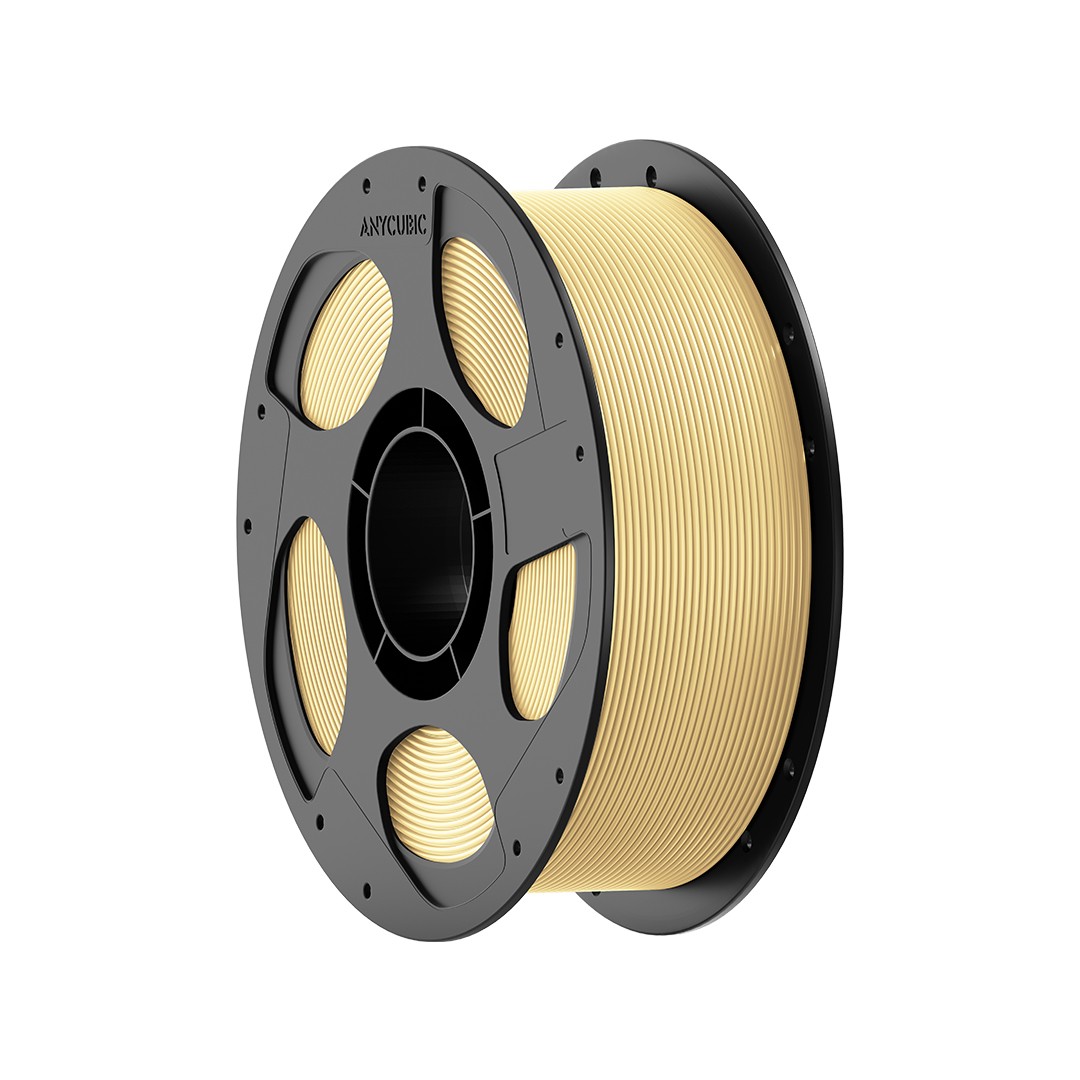
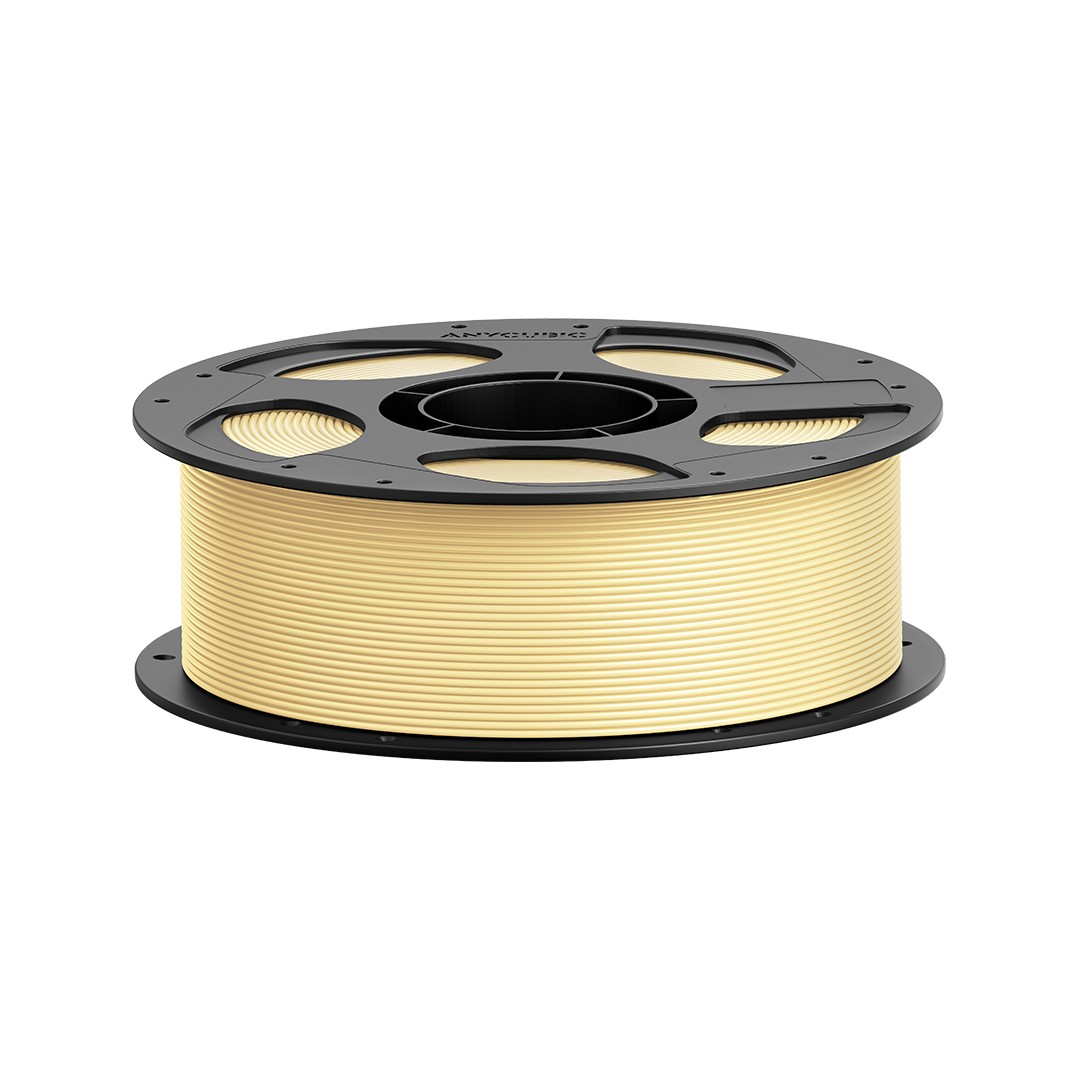
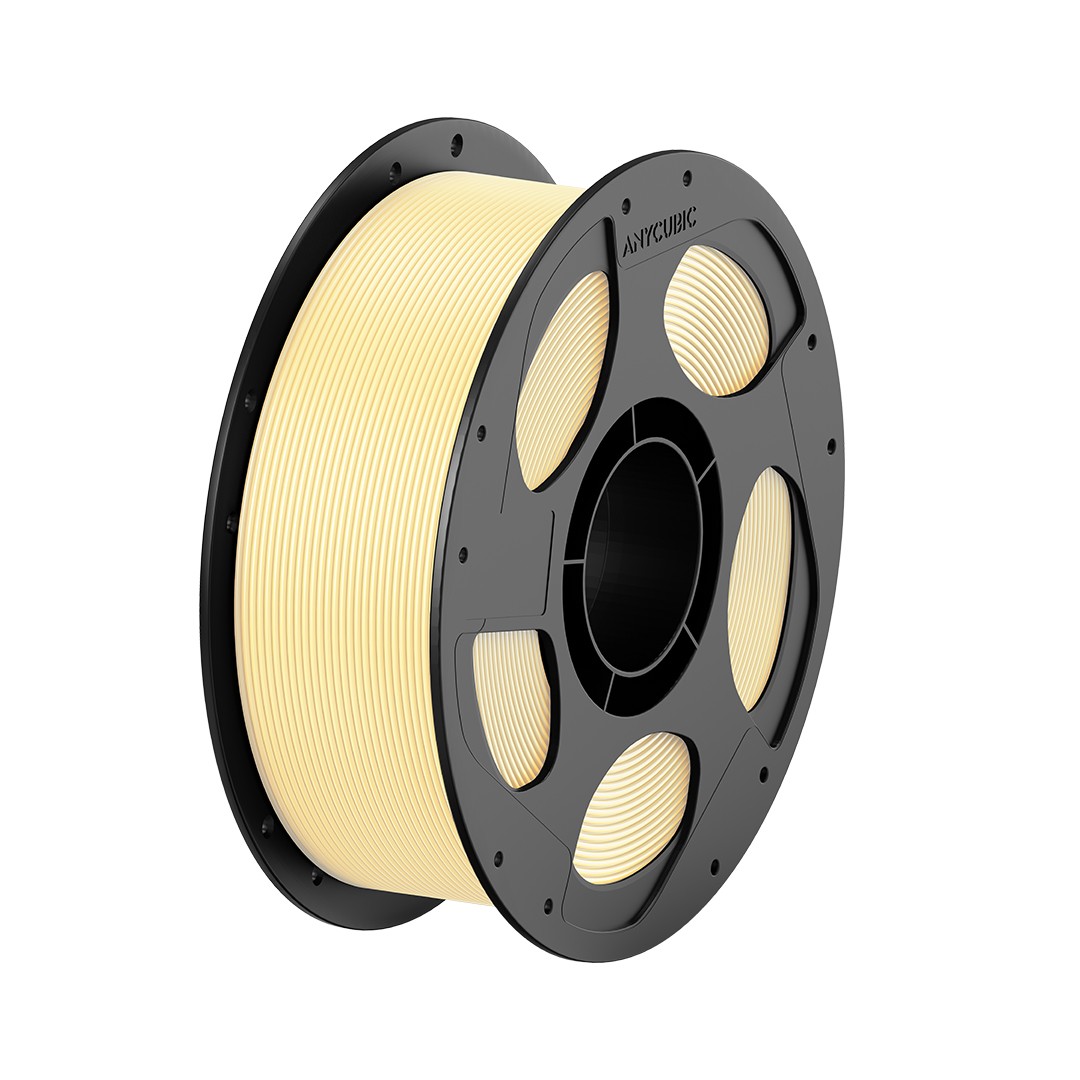

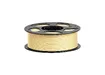

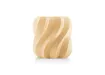
Anycubic PETG Cream Filament 1.75 mm 1 kg for 3D Printer
✨ Anycubic PETG Cream Filament is a strong, stable and versatile PETG filament with a soft cream appearance for FDM 3D printing. It combines PLA-like printability, ABS-like toughness and PETG practicality for decorative, technical and functional printing tasks.
🍦 Cream color gives printed models a soft, light, clean and visually pleasant look. This filament is a strong choice for decorative items, interior elements, mockups, housings, accessories, souvenirs, organizers, design models and parts that need a calm light shade without harsh pure white brightness.
✅ Anycubic PETG Cream is moisture-resistant, dimensionally stable, offers reliable layer adhesion and is suitable for printed parts that need strength, stability and a clean cream appearance.
✅ PETG Material • 🍦 Cream • 📦 1 kg • 📏 1.75 mm • ⚙️ 230–250 ℃ • 💧 Water Resistant • 💪 Strong • 🚀 ACE Compatible • ♻️ Reusable Spool
⭐ Key Advantages
- 🍦 Soft cream shade — a light natural color for decorative, interior, design and custom models.
- ✨ Clean visual appearance — printed models look calm, neat and aesthetic without an overly bright color accent.
- ✅ Versatile PETG material — a strong balance of durability, stability, moisture resistance and printability.
- 💪 Improved strength — better suited for functional parts than standard PLA.
- 💧 Moisture resistance — suitable for parts exposed to humid environments.
- 🌦️ Practical outdoor use — PETG maintains shape and appearance better in everyday and outdoor applications.
- 🧪 Chemical resistance — resistant to many household substances, detergents and mild chemicals.
- 📐 Stable geometry — low shrinkage helps achieve accurate dimensions and smooth surfaces.
- 🔗 Good layer adhesion — layers bond reliably for stronger printed parts.
- ⚡ Printing speed up to 250 mm/s — suitable for modern high-speed FDM 3D printers.
- 🚀 ACE Compatibility — compatible with Anycubic ACE / ACE Pro systems.
- 🎯 Bambu Lab AMS support — suitable for Bambu Lab AMS when used with a compatible 1.75 mm spool and correct loading.
- ♻️ Reusable spool support — practical for more economical filament use.
📋 Technical Specifications
| 🏷️ Brand | Anycubic |
| 📌 Product Name | Anycubic PETG Cream Filament |
| 🧪 Material Type | PETG |
| 🍦 Color | Cream |
| 🔢 Color Code | #F9DFB9 |
| 📏 Filament Diameter | 1.75 mm |
| 📦 Net Weight | 1 kg |
| 🔩 Recommended Nozzle Size | 0.2 mm or above |
| ⚙️ Printing Technology | FDM / FFF |
| 🚀 ACE Compatibility | Yes, compatible with Anycubic ACE / ACE Pro |
| 🎯 Bambu Lab AMS Support | Yes, suitable with a compatible 1.75 mm spool and correct loading |
| 📐 AMS Compatible Spool Size | Width 50–68 mm, diameter 197–202 mm |
| ♻️ Reusable Filament Spool | Supported |
| 🌡️ Dry Out Before Use | Required |
⚙️ Recommended Printing Parameters
| 🔥 Nozzle Temperature | 230–250 ℃ |
| 🌡️ Heated Bed Temperature | 60–70 ℃ |
| ⚡ Recommended Printing Speed | 50–250 mm/s |
| 🚀 Maximum Volume Speed | 12 mm³/s |
| 🔩 Recommended Nozzle Size | 0.2 mm or above |
| 🌬️ Cooling | Moderate, depending on model and speed |
| 🧲 Build Plate Adhesion | PEI, glass, textured plate, glue if needed |
| 🏠 Enclosed Chamber | Not required, but useful for large parts |
| ↔️ Retraction | Adjust individually for the extruder and hotend |
| ♨️ Drying Before Printing | 55–65 °C, 6–8 h |
📊 Physical Properties
| ⚖️ Density | 1.23 g/cm³ |
| 🌊 Melt Index | 25±3 g/10 min at 250 ℃ / 2.16 kg |
| 🔥 Melting Point Temperature | 130 ℃ |
| 🌡️ Vicat Softening Temperature | 72 ℃ |
| ♨️ Heat Deflection Temperature 0.45 MPa | 69 ℃ |
💪 Mechanical Properties
| 📐 Young’s Modulus | 1850±100 MPa |
| 💪 Tensile Strength | 52±1 MPa |
| ↔️ Elongation at Break | 13±1% |
| 🦾 Bending Modulus | 2000±50 MPa |
| 🛡️ Bending Strength | 80±2 MPa |
| ⚡ Izod Impact Strength X-Y | 45±2 kJ/m² |
| 🔗 Tensile Strength Z | 31±3 MPa |
🍦 Cream Color Features
- ➤ Cream is a strong choice for models that need to look light, soft, natural and clean.
- ➤ The cream shade is less harsh than pure white, making it suitable for interior and decorative prints.
- ➤ A good option for imitating ceramic, stone, light plastic, decorative inserts and calm design concepts.
- ➤ Cream PETG looks especially attractive on smooth surfaces and clean outer walls.
- ➤ For the cleanest shade, use dry filament, stable printing temperature and a clean nozzle without dark filament residue.
🧩 Best Applications
- ➤ decorative models, figurines and souvenirs;
- ➤ interior elements, organizers, stands, holders and boxes;
- ➤ housings, covers, protective elements and functional parts;
- ➤ architectural, furniture, household item and design mockups;
- ➤ light accessories, DIY parts and décor elements;
- ➤ products with a soft cream visual accent;
- ➤ workshop, office, home and commercial presentation parts;
- ➤ products requiring improved moisture resistance and strength.
🔧 3D Printer Compatibility
✅ Anycubic PETG Cream Filament Ø1.75 mm is compatible with most FDM 3D printers that support PETG and can reach a nozzle temperature of up to 250 ℃. It can be used with Anycubic Kobra, Anycubic Kobra 2, Anycubic Kobra 3, Creality Ender, Creality K1, Bambu Lab A1, Bambu Lab P1P, Bambu Lab P1S, Bambu Lab X1, Prusa, Elegoo Neptune, Sovol, Artillery, Flashforge, QIDI and other FDM printers using 1.75 mm filament.
🎯 For Bambu Lab AMS, the material is suitable as a standard 1.75 mm filament when the spool fits AMS dimensions or when a compatible reusable spool or adapter is used.
🛠️ Printing Recommendations
- ♨️ Dry the spool before printing, especially if it has been stored open for a long time.
- 🔥 Start with 240 ℃ nozzle temperature, then fine-tune within the 230–250 ℃ range.
- 🌡️ Use a 60–70 ℃ heated bed for stable adhesion.
- ↔️ Tune retraction and printing temperature to reduce stringing.
- 🌬️ Avoid excessive cooling on the first layers.
- 🍦 For a cleaner cream finish, print outer walls at a stable speed and avoid wet filament.
- 🧼 Before printing with a light color, clean the nozzle from dark filament residue.
- 🏠 For large parts, reduce speed and consider using an enclosed chamber.
- 🎯 When using Bambu Lab AMS, make sure the spool rotates freely, does not rub against the AMS housing and feeds filament correctly.
📦 Storage Recommendations
📦 PETG is hygroscopic, so the spool should be stored in a dry sealed bag or container with silica gel. If bubbles, popping sounds, rough surfaces, unstable extrusion or excessive stringing appear during printing, dry the filament at 55–65 °C for 6–8 hours.
⭐ Why Buy
⭐ Anycubic PETG Cream is a strong choice for users who need a durable, moisture-resistant and visually soft material for FDM 3D printing. The cream shade gives printed models a light, clean and natural appearance, while PETG properties make the prints suitable not only for decorative parts but also for practical functional components.
❓ FAQ
Yes, it is suitable for users with basic FDM printing experience. It requires more accurate tuning than PLA, but it is easier to print than many engineering-grade materials. The recommended nozzle temperature is 230–250 ℃. The recommended heated bed temperature is 60–70 ℃. Cream PETG is especially suitable for interior details, decorative models, light housings, organizers, souvenirs, architectural mockups, design products and models with a soft natural shade. Yes, it is suitable for Bambu Lab AMS as a 1.75 mm filament when used with a compatible spool, correct loading and free spool rotation inside AMS. Yes, Anycubic PETG supports ACE Compatibility on compatible Anycubic systems. An enclosed chamber is not required for most models. For large parts, it may improve printing stability. Yes, drying is required for PETG. The recommended drying condition is 55–65 °C for 6–8 hours.✅ Is Anycubic PETG Cream suitable for beginners?
🔥 What printing temperature is recommended?
🌡️ What heated bed temperature is required?
🍦 What models are best for Cream PETG?
🎯 Is Anycubic PETG Cream suitable for Bambu Lab AMS?
🚀 Is this filament compatible with Anycubic ACE?
🏠 Does PETG require an enclosed chamber?
♨️ Should PETG be dried before printing?